A tile backsplash is one of the quickest ways to make a kitchen look finished. It protects the wall behind your sink and stove from splashes and grease, and it’s easy to wipe clean. Here’s how to choose one and what the job involves.
Choosing your tile
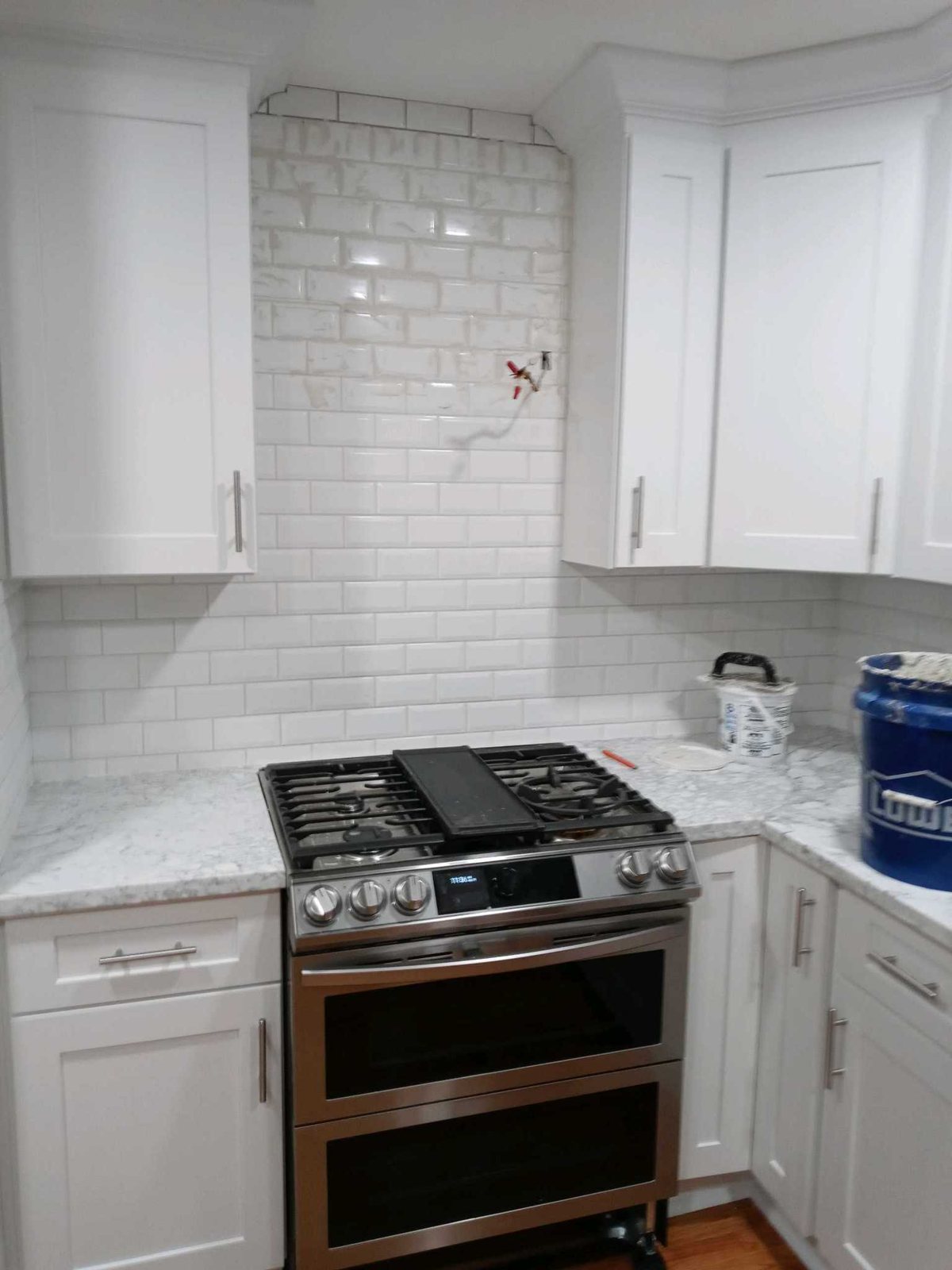
- Ceramic subway tile is classic, affordable and easy to keep clean. Beveled subway tile adds a little depth and shine.
- Porcelain tile is denser and very durable, and it comes in a wide range of looks, including stone and marble styles.
- Glass tile reflects light and works well as an accent strip or in smaller kitchens.
- Larger tiles mean fewer grout lines, which some homeowners find easier to clean.
Picking a grout color
Grout changes the whole look. White grout with white tile gives a clean, seamless look but shows stains sooner. Light gray grout is forgiving and still looks crisp. Dark grout makes each tile stand out and hides wear, but it’s a bolder look. If you’re unsure, ask to see a small sample board before you decide.
Layouts and patterns
- Running bond (brick pattern): the classic subway layout.
- Stacked: tiles lined up in straight rows for a more modern look.
- Herringbone: eye-catching, but it takes more cuts and more labor.
- Full height behind the range: running tile all the way up to the ceiling or hood makes a strong focal point.
How high should the backsplash go?
Most backsplashes run from the countertop to the bottom of the upper cabinets. Around windows, tile can wrap the trim. Where there are no upper cabinets, many homeowners take it all the way to the ceiling for a cleaner finish.
What installation involves
- Prep: we protect the countertops and appliances, turn off power to outlets and check that the wall is flat and solid.
- Layout: we plan where the cuts will land so the pattern looks balanced, especially around windows and outlets.
- Setting the tile: tile goes up with adhesive and spacers to keep the lines even.
- Cuts and edges: outlets, corners and ends get finished so nothing looks rough.
- Grout: once the adhesive has set, grout fills the joints and the tile is cleaned.
- Caulk and covers: the joint along the countertop is caulked, and outlet covers go back on.
A typical kitchen backsplash is often done in a day or two, depending on its size and how many cuts the layout needs.
Caring for your backsplash
- Wipe it down with warm water and mild dish soap.
- Skip harsh scrubbers that can scratch glossy tile.
- Ask whether sealing the grout makes sense for your tile and grout type.
- Re-caulk the countertop joint if it starts to crack or pull away.
Ready for a new backsplash? See our tile installation page or book a free onsite estimate, and we’ll help you pick a tile that fits your kitchen.
See our ceramic tile: showers, backsplashes & floors page, or book a free onsite estimate anywhere in Denham Springs, Baton Rouge and South Louisiana.